Sale Price:
$5.00
Original Price:
$9.00
This Slide Deck provides a comprehensive framework for household resilience, tactical preparedness, and decentralized self-reliance during significant macro-disruptions and potential societal collapse. By transitioning from passive survivalism to Tactical Optimism and the Offensive Pivot Protocol, households may actively manage crises through structured emotional regulation and rapid execution. Furthermore, the material details practical sovereign micro-utilities, such as converting vehicles into emergency power sources, isolating domestic water reservoirs, and establishing offline communication nodes. Drawing upon historical case studies, such as Cuba’s organopónicos and post-Soviet Russian dacha networks, the documentation illustrates how decentralized food production, alternative trade networks, and hybrid microgrids effectively sustain communities during the failure of centralized infrastructure. Ultimately, maintaining a disciplined burn-rate audit cycle and a low-profile operational posture enables households to navigate severe systemic shocks while ensuring long-term generational survival.
This Slide Deck provides a comprehensive framework for household resilience, tactical preparedness, and decentralized self-reliance during significant macro-disruptions and potential societal collapse. By transitioning from passive survivalism to Tactical Optimism and the Offensive Pivot Protocol, households may actively manage crises through structured emotional regulation and rapid execution. Furthermore, the material details practical sovereign micro-utilities, such as converting vehicles into emergency power sources, isolating domestic water reservoirs, and establishing offline communication nodes. Drawing upon historical case studies, such as Cuba’s organopónicos and post-Soviet Russian dacha networks, the documentation illustrates how decentralized food production, alternative trade networks, and hybrid microgrids effectively sustain communities during the failure of centralized infrastructure. Ultimately, maintaining a disciplined burn-rate audit cycle and a low-profile operational posture enables households to navigate severe systemic shocks while ensuring long-term generational survival.


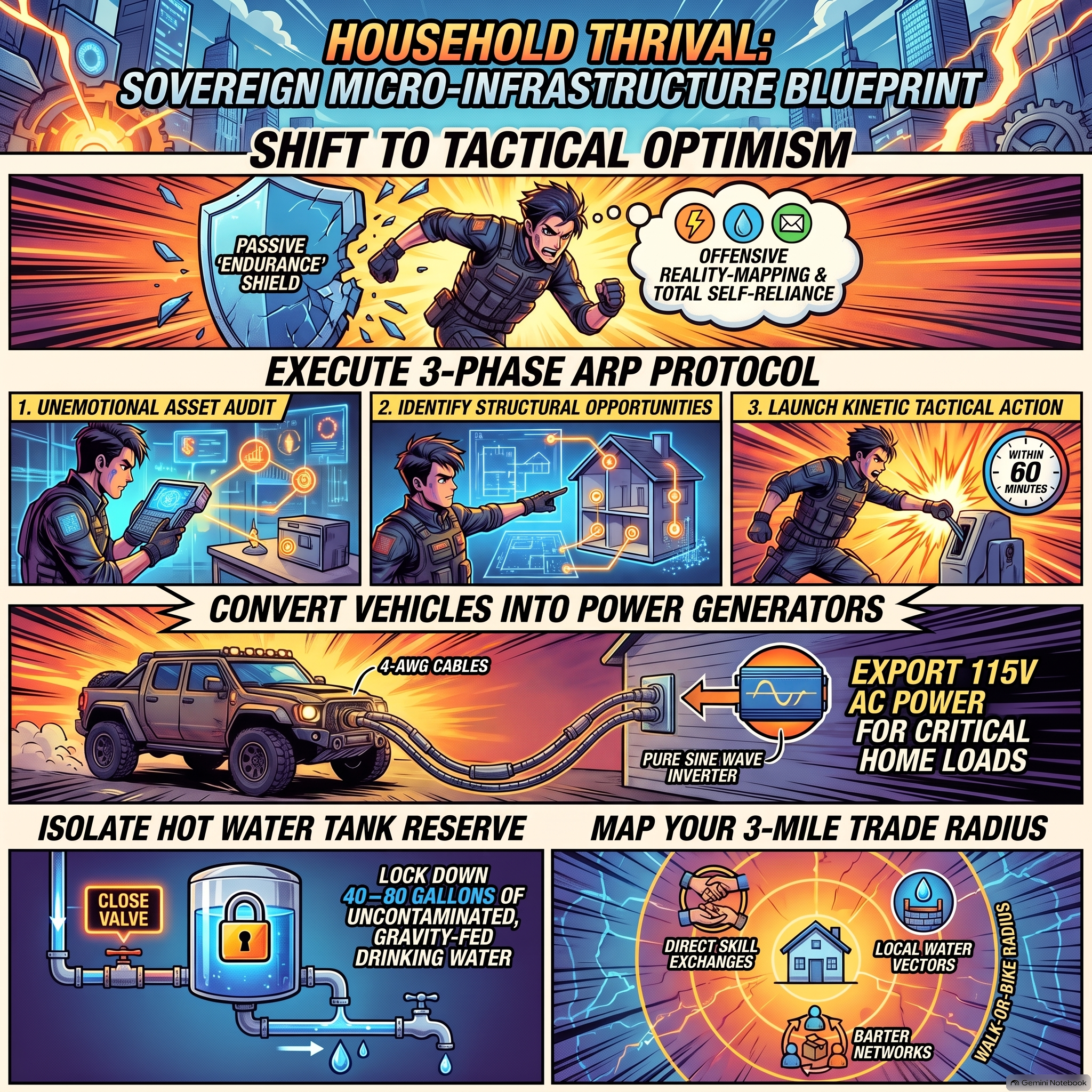 Image 1 of 2
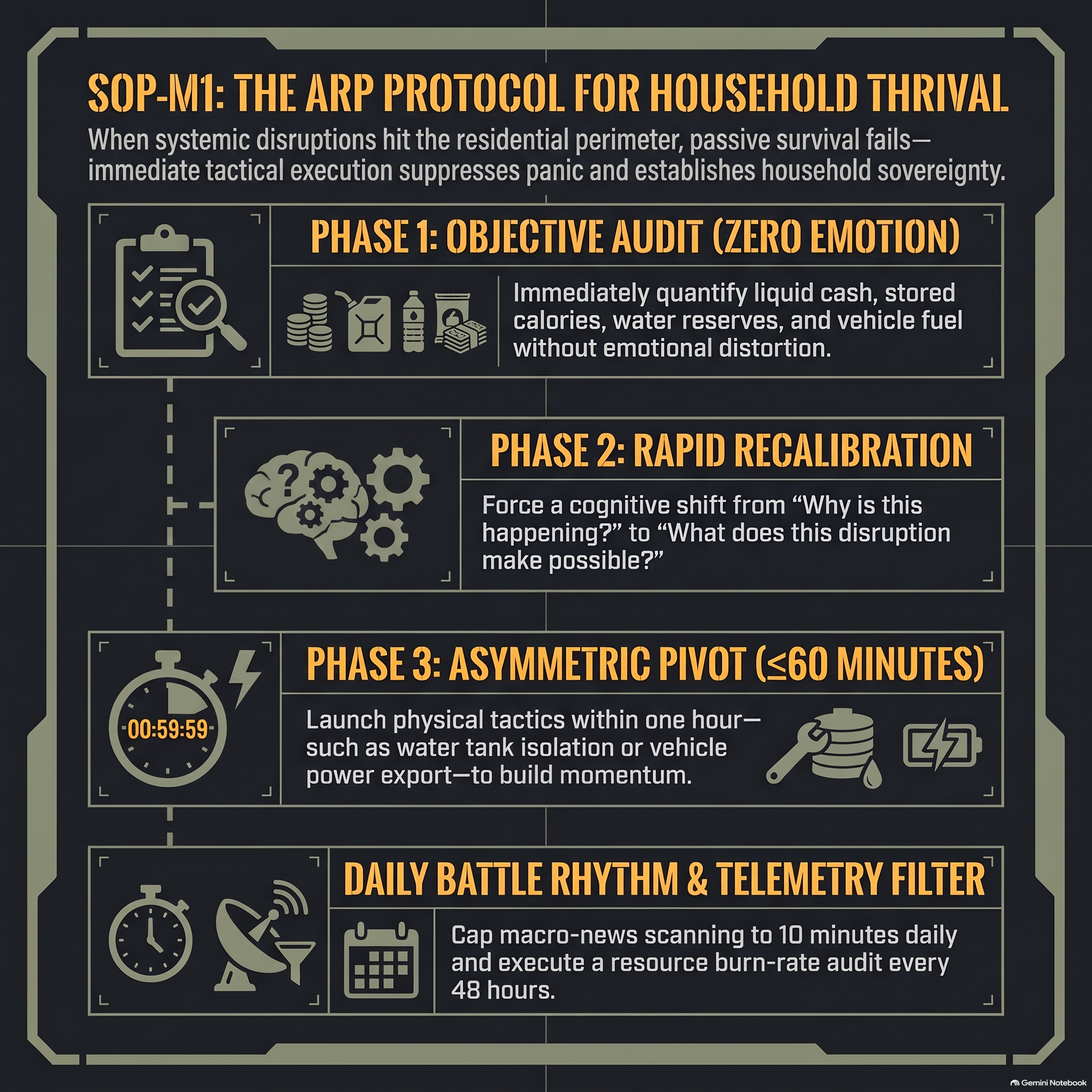 Image 2 of 2